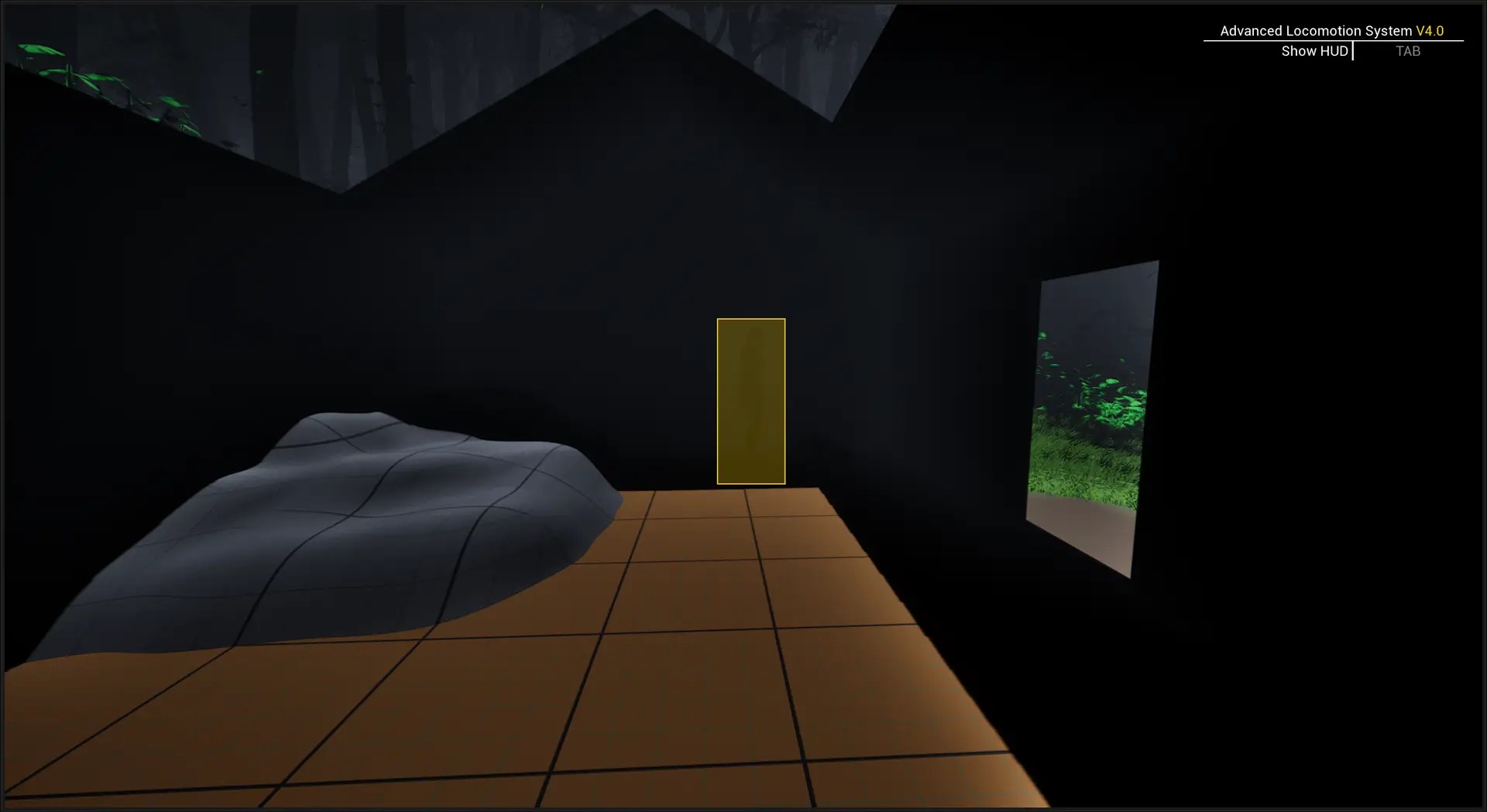
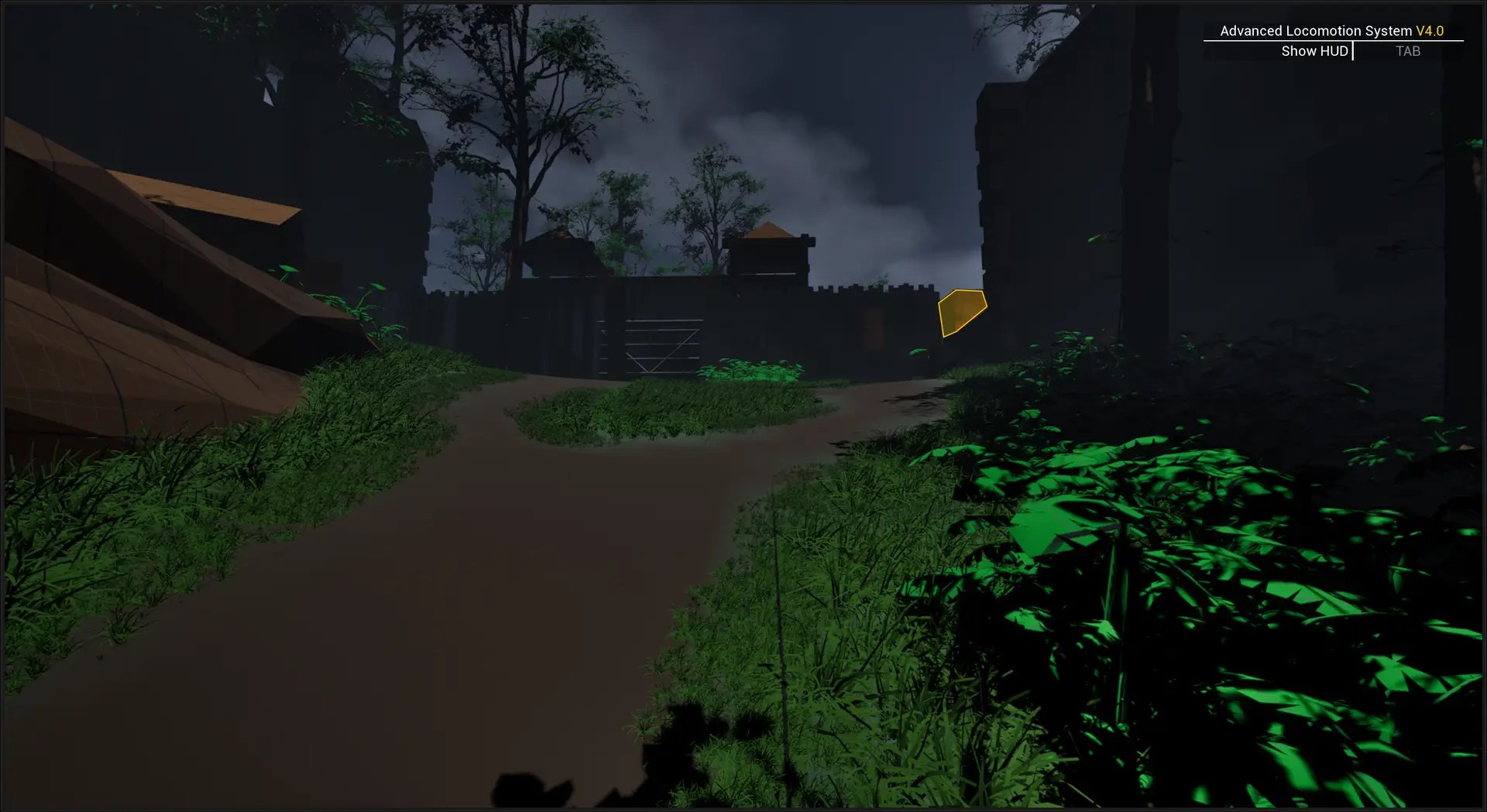
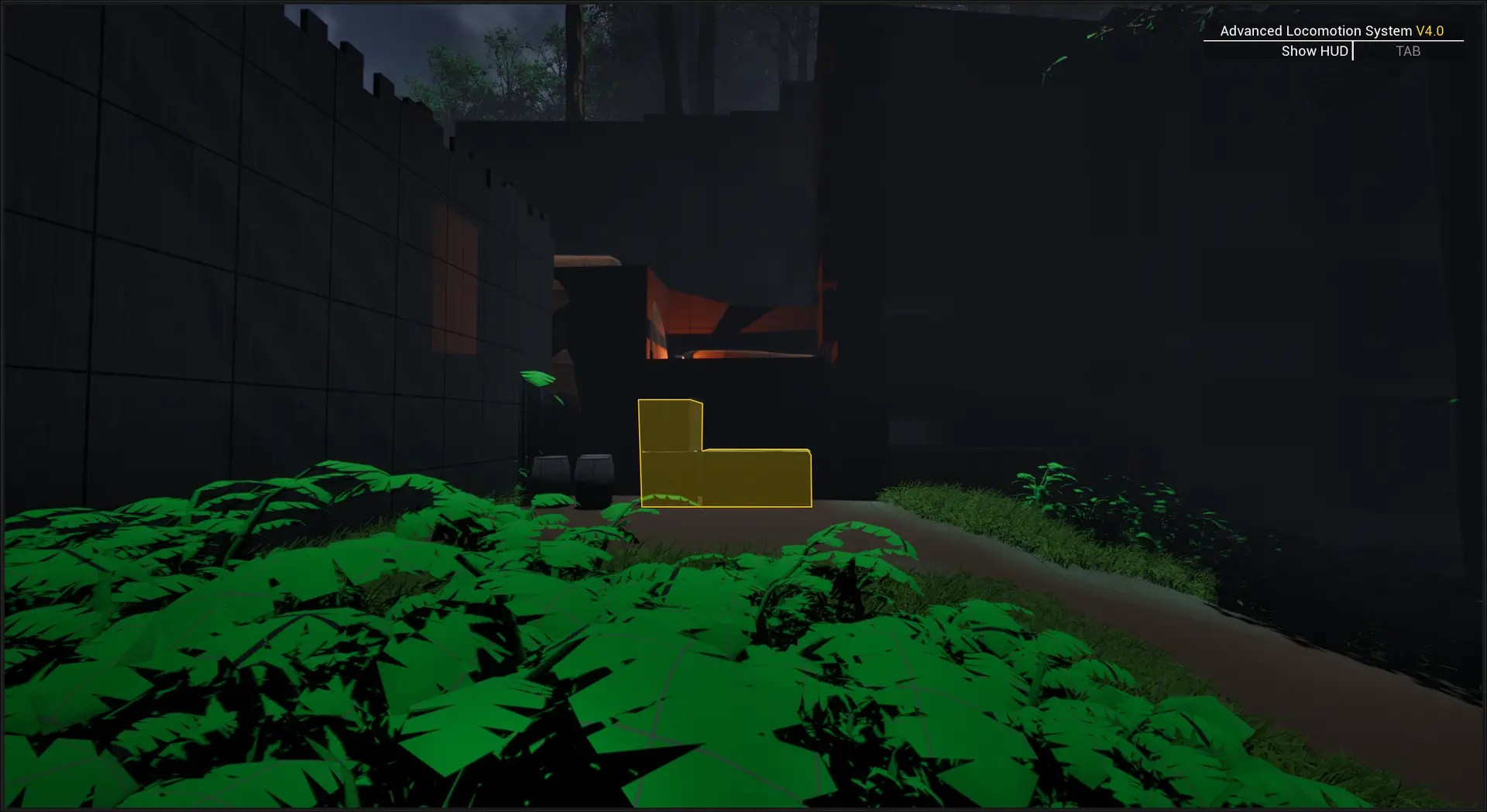
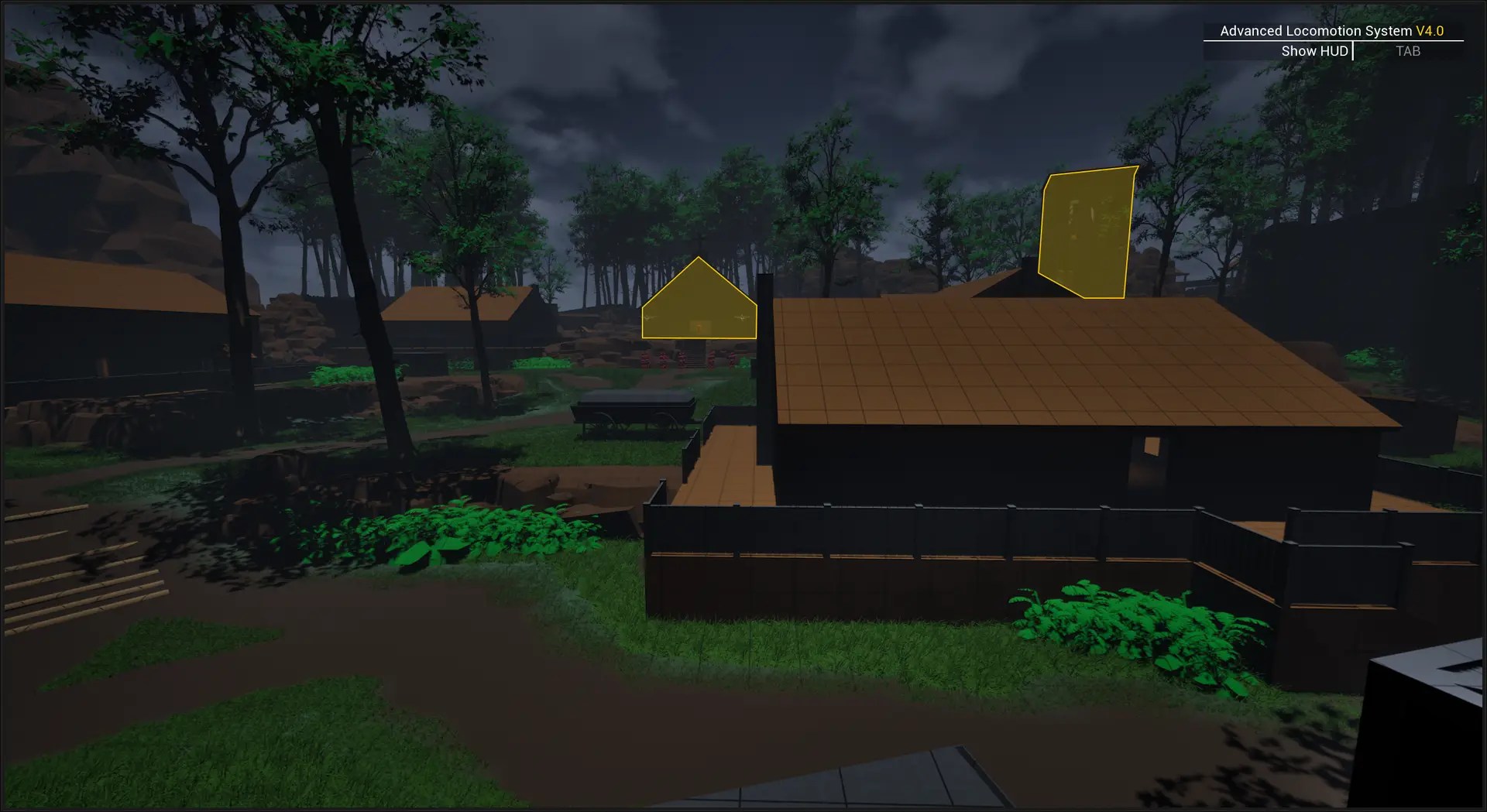
Here is my second level design project, completed as part of my CGMA training. The objective is to design an exploration sequence in survival horror, centered on an atmosphere of tension and psychological horror, with readable progression and controlled pacing.
This document explains my design intentions (guidance, pacing, threat and resource management) and the means used to achieve them: placement of obstacles and points of interest, spatial organization, encounters, as well as work on lighting, composition, and post-processing volumes to reinforce the atmosphere. Resident Evil and The Last of Us serve as references to calibrate tension, readability, and the sense of danger.
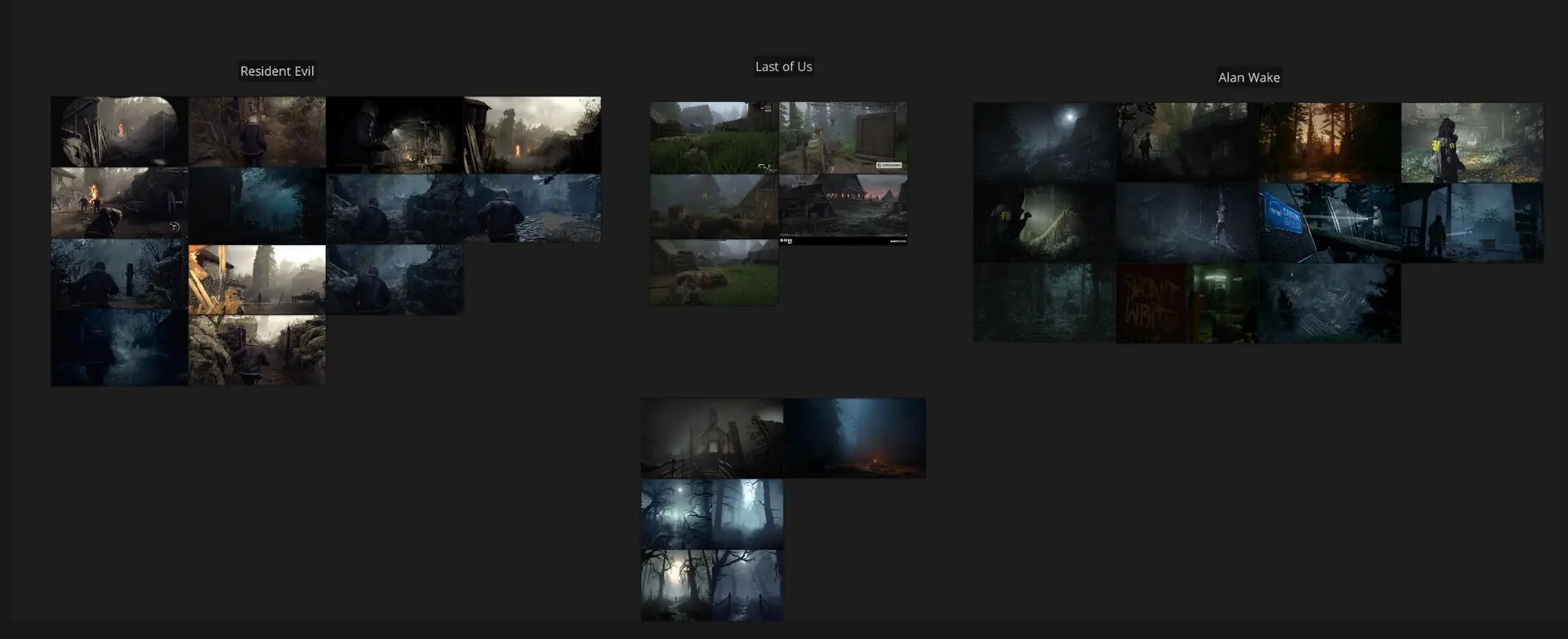
This moodboard accompanies the design document by gathering the visual and thematic references that define the level’s tone and readability. The research focuses on horror spaces where architecture, lighting, and composition serve to establish tension.
The objective is to maintain a balance between fear and curiosity through controlled environmental storytelling and pacing, using visual cues to guide the player while preserving an oppressive atmosphere.
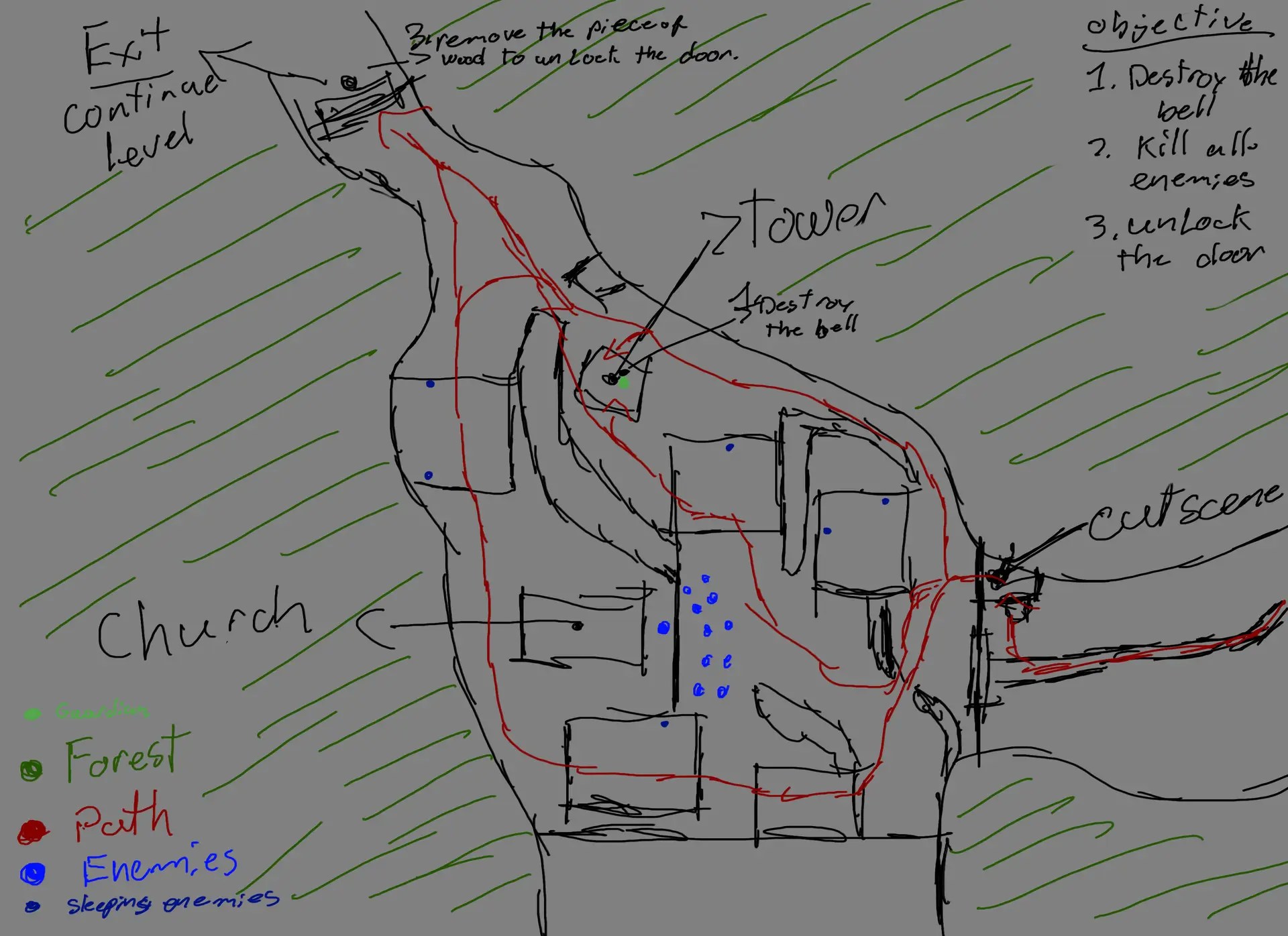
Drawing on references like Resident Evil and The Last of Us, I created several sketches to validate the overall structure, critical path, and pacing curve before prototyping.
The gameplay is built around four pillars—survival, combat, exploration, and narrative—translated into level design choices (threat zones, breathing spaces, and guidance cues) in order to maintain tension and immersion.
The level is divided into two main sections. The first, set in a dense forest, uses limited visibility and audio/visual cues to guide the player, control readability, and gradually build tension leading up to the abandoned village.
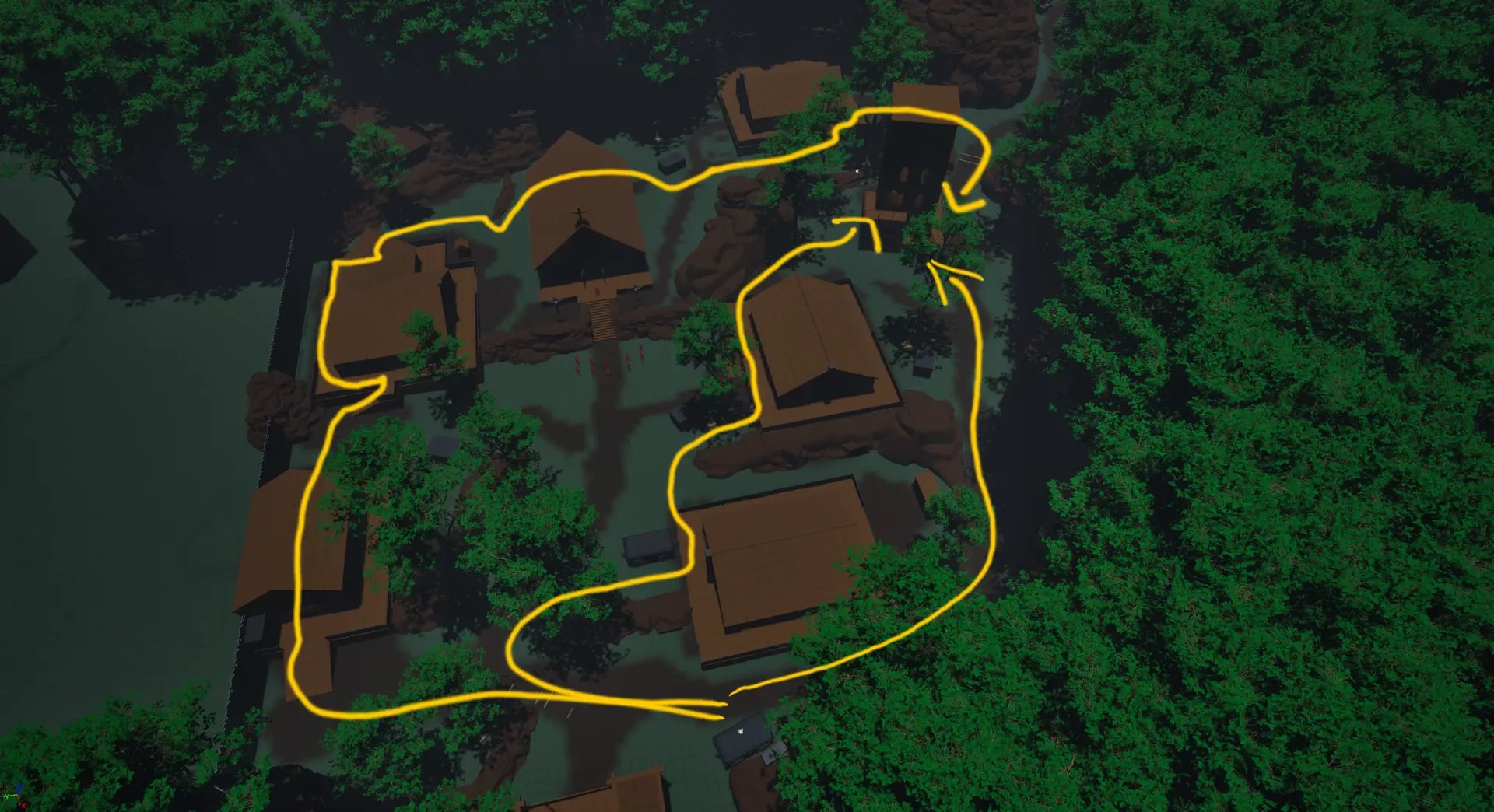
This section corresponds to the second part of the level and aims to structure the player’s navigation around strong landmarks (church, tower) in order to maintain readable progression through the village.
The objective of the sequence is to reach the top of the tower before the guard rings the bell, triggering a state change (village alert). This constraint creates constant pressure that paces the approach, reinforces tension, and pushes the player to balance stealth, speed, and risk-taking.
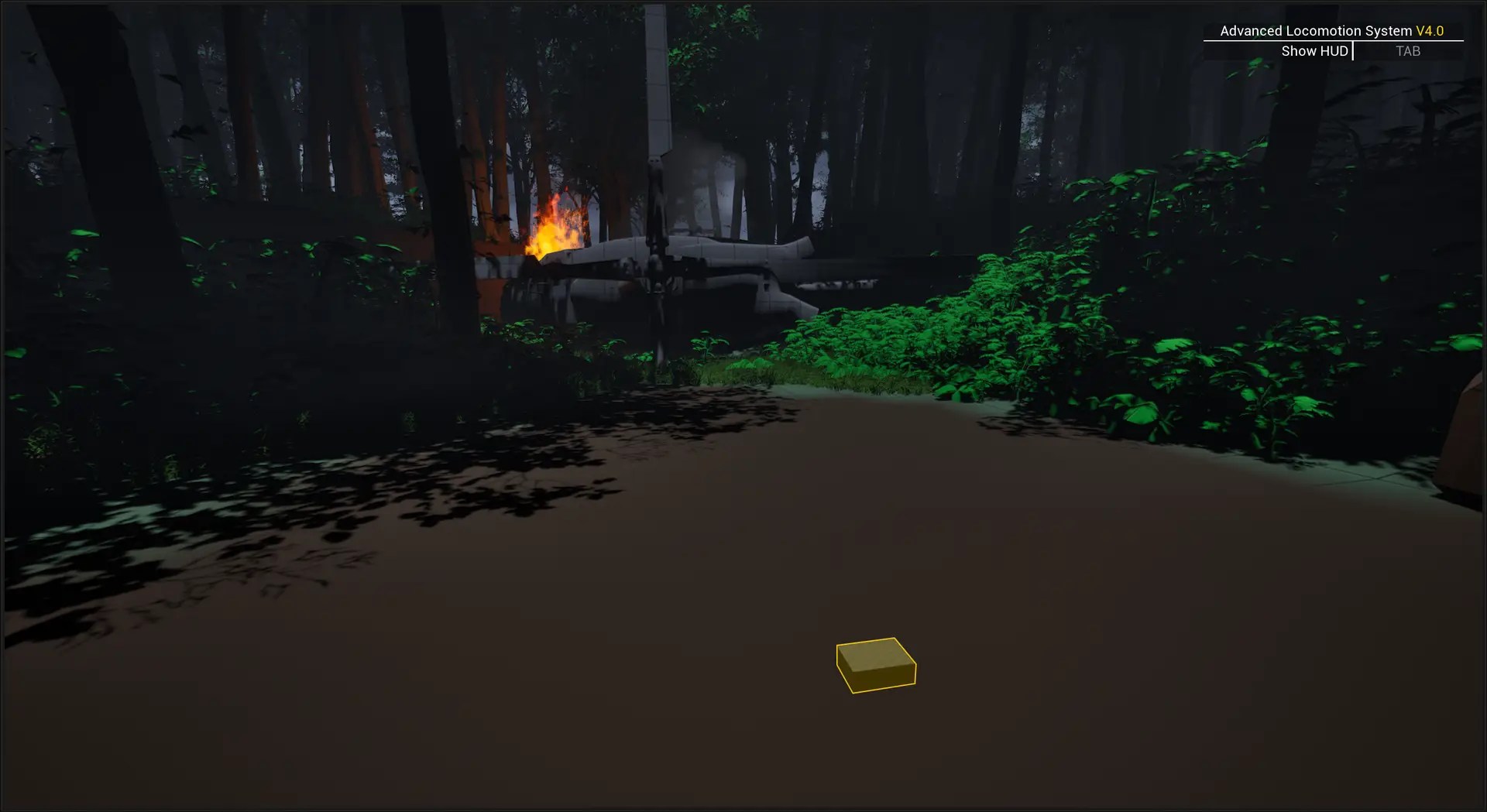
After the introduction cinematic, the player starts with a low health bar in order to immediately establish a sense of vulnerability and anchor the survival pillar. A health kit is placed on the critical path and framed within the sightlines to serve as an introductory element, introducing the healing mechanic through staging rather than through the interface. The lighting and composition highlight the object, guide the player’s attention, and reinforce learning through the environment.
Natural elements (trees, foliage) are used as visual funnels to structure the sightlines and subtly guide the player toward the village, without resorting to interface markers. The critical path is the only area benefiting from direct lighting: the contrast and framing create a clear focal point, ensuring readable navigation despite low visibility.
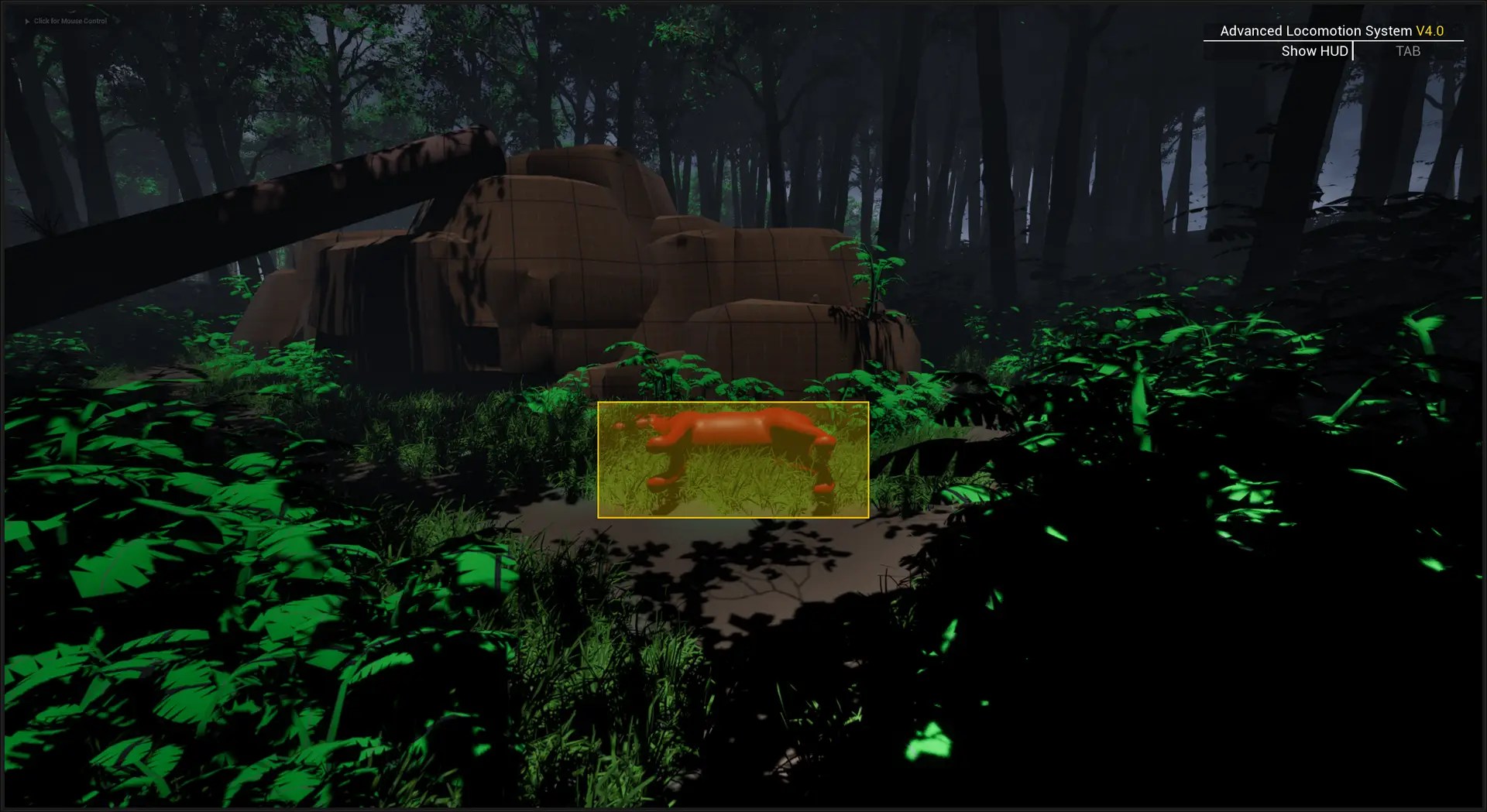
The level opens with an animal carcass, used as a visual hook on the critical path to capture attention and trigger an implicit narrative reading. This element serves as teasing: it immediately establishes the tone, suggests imminent danger, and prepares the player for a hostile zone without interrupting progression.
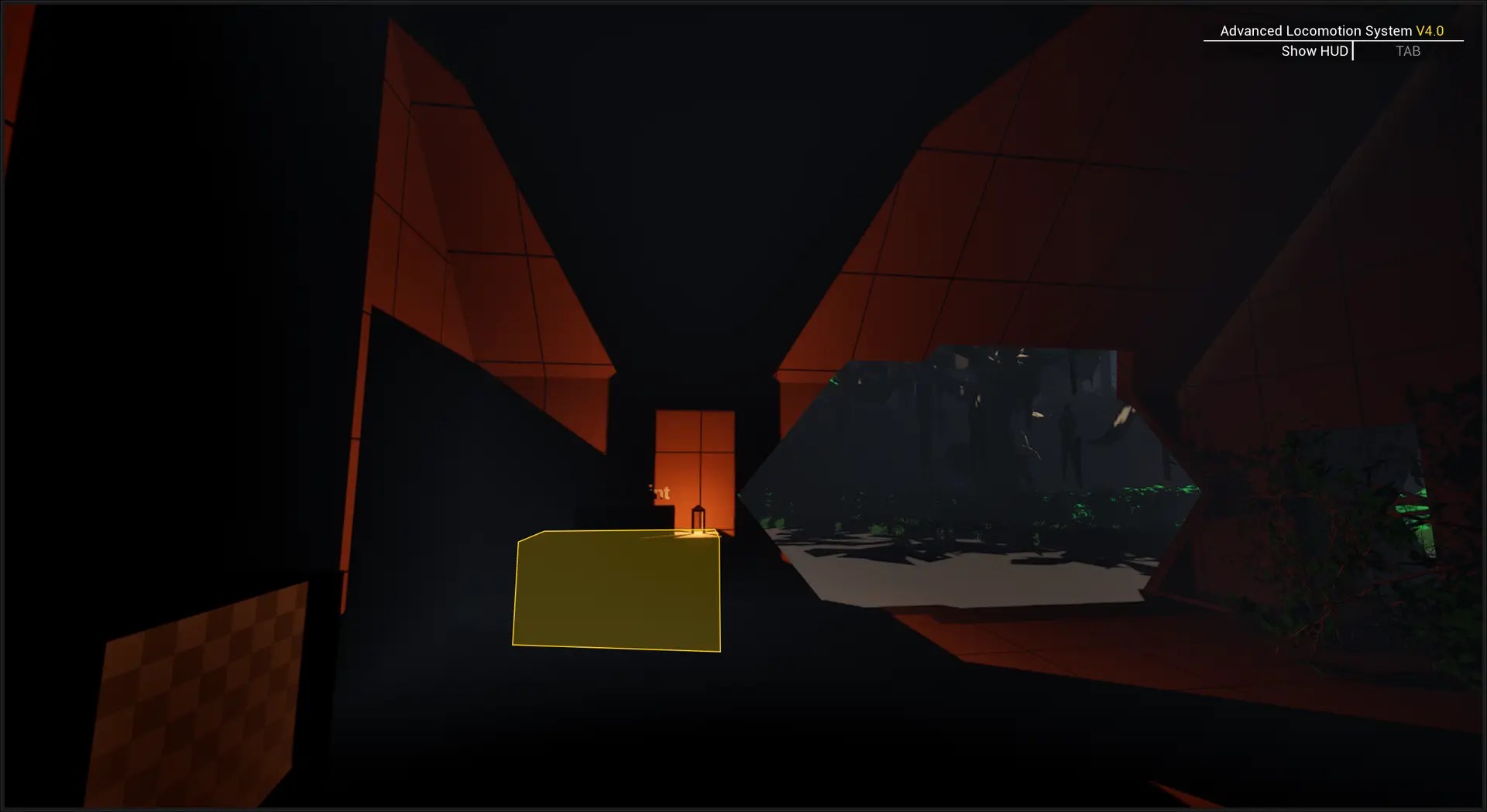
This moment introduces the save system as a learning step. Placed on the critical path, in a low-threat zone after the introduction sequence, it reduces friction and allows the player to understand the save function in a safe context, before the tension increases.
This first combat encounter is designed as a low-stakes situation to introduce weapon usage and the basics of timing, before more demanding confrontations.
As the player approaches the village gates, a distant light source serves as a visual marker and focal point: it structures the sightlines and subtly guides the player toward the entrance, without resorting to interface markers.
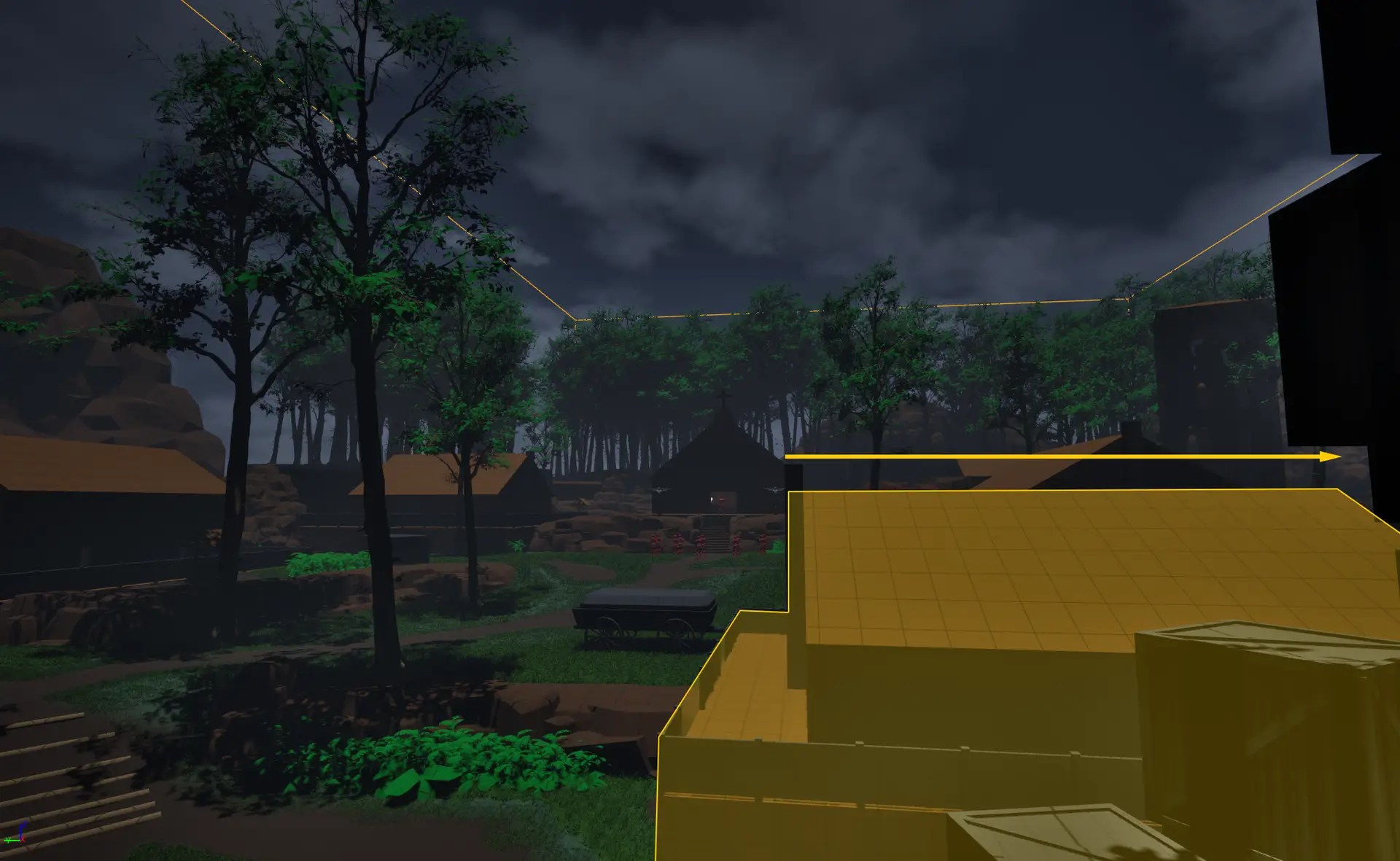
The climbing sequence introduces verticality in a readable way: the crates are placed as access steps to direct the player toward the rocky surface and validate the use of environmental elements as support.
The church and its bell tower function as landmarks visible from a distance, structuring the sightlines and naturally guiding progression. Upon reaching the cliff edge, a short cinematic shows villagers gathered in front of the church, which recontextualizes the space and establishes the next objective. The bell tower then becomes an orientation marker and a « goal reveal » that guides the player while anchoring motivation in the narrative.
The bell tower is accessible through three distinct paths, designed to offer meaningful choice to the player and reward exploration, while converging toward the same objective in order to preserve pacing and flow.
The tower functions as a major landmark and progression objective: visible from a distance, it structures navigation and establishes a clear target. At the top, the player must destroy the bell in order to prevent the village from being alerted, which introduces a constraint of pressure and urgency.
The bell’s fall triggers a scripted event that crashes through the floors and carries the player down to the lower level, transforming the action into a striking vertical transition. This impact acts as a state change: it draws the villagers’ attention, increases tension, and shifts the zone’s dynamics by tipping the situation toward a more dangerous context.


This iteration prioritizes spatial readability and guided progression: the blockout validates the sightlines and landmarks, the lighting is calibrated to establish the atmosphere and support orientation, and the enemy placement favors a stealthy approach toward the bell tower while maintaining a balanced level of challenge. The save points are positioned to structure the pacing and limit frustration. I iterated on the staging, encounter density, and rhythm in order to make the experience more engaging.
For the next iterations, I want to improve the environment’s readability, replace the static enemies with AI, add more enemies, and implement a minimalist interface as well as combat mechanics.
I plan to adjust several elements in order to improve the prototype’s readability:
Adjust the lighting and replace the crates with props more suited to the context in order to strengthen the visual coherence and credibility of the scene.
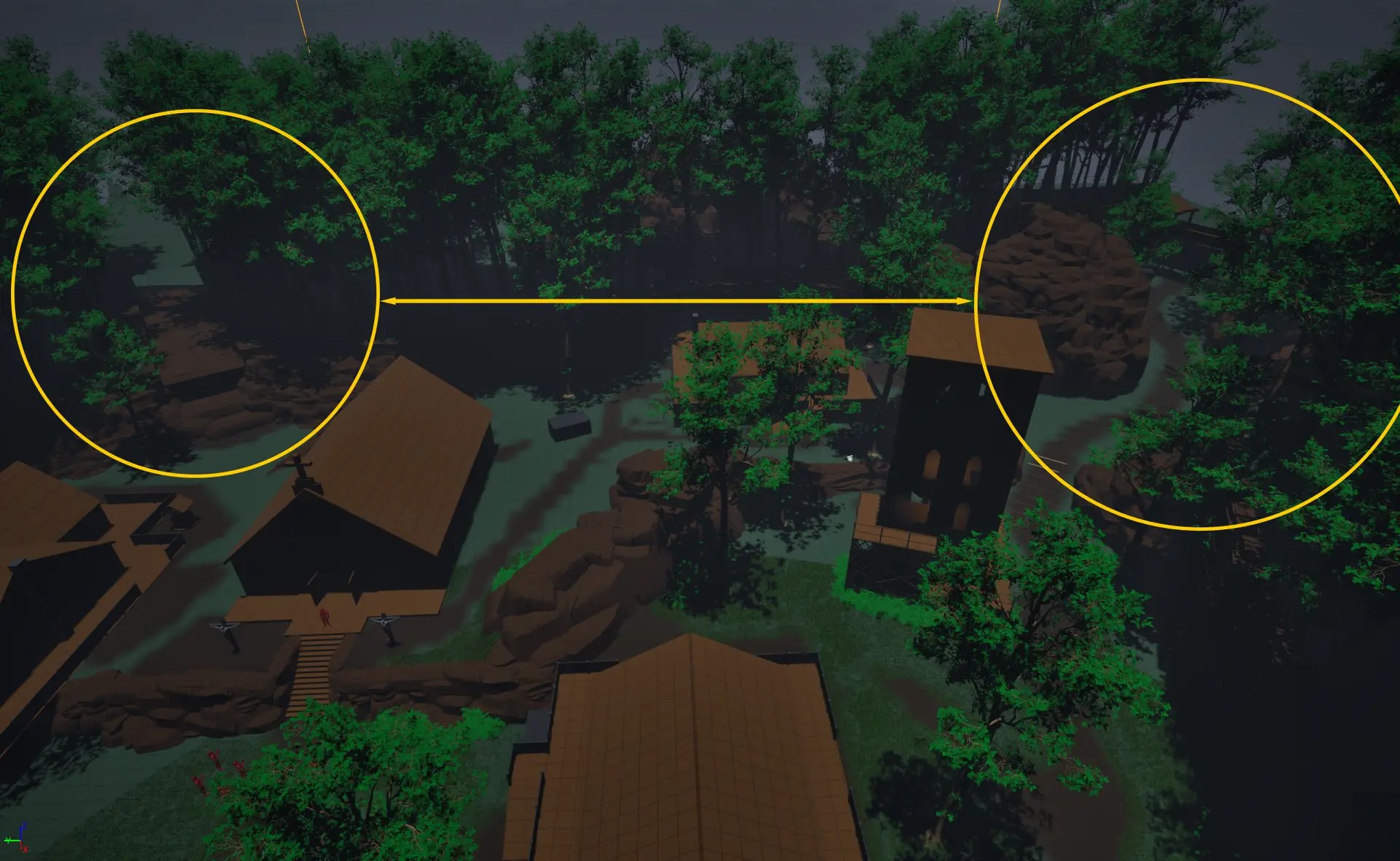
Move the house to the right in order to open a sightline from the rocky viewpoint toward the church, creating negative space between the two buildings. This adjustment improves the scene’s readability and reinforces the church as a visual landmark.